
soldering play in Pcb assembly companies
Soldering plays a pivotal role in the PCB assembly process, serving as the primary method for permanently attaching electronic components to printed circuit boards (PCBs). PCB assembly companies rely on soldering techniques to create reliable electrical connections between components and the conductive traces on the PCB, ensuring the functionality and performance of electronic devices. Understanding the importance of soldering sheds light on its critical role within the electronics manufacturing industry.
One of the key functions of soldering in pcb assembly companies is to create electrical connections between the leads of electronic components and the conductive traces on the PCB. Solder, a fusible metal alloy, is applied to the joint between the component lead and the PCB pad, where it forms a metallurgical bond as it cools and solidifies. This bond provides a low-resistance electrical pathway, allowing signals to flow between components and enabling the circuit to function as intended.
Moreover, soldering serves as a mechanical anchor, securing electronic components to the surface of the PCB. In addition to providing electrical connections, solder forms a strong bond between the component leads and the PCB pads, preventing components from becoming dislodged or detached during operation or handling. This mechanical stability is essential for ensuring the reliability and longevity of electronic devices, particularly in applications where shock, vibration, or thermal cycling may occur.
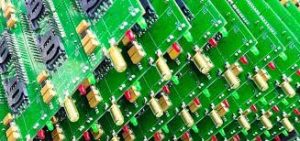
What role does soldering play in Pcb assembly companies?
Furthermore, soldering facilitates thermal management within electronic devices by providing a path for heat dissipation. Electronic components generate heat during operation, and effective thermal management is critical for preventing overheating and ensuring the reliability of the device. Solder acts as a thermal conductor, transferring heat away from components and distributing it across the PCB, where it can be dissipated through thermal vias or other cooling mechanisms.
Additionally, soldering enables the assembly of components with different thermal expansion coefficients onto the same PCB. Electronic components and PCB materials may expand and contract at different rates in response to changes in temperature, which can lead to stress and potential failure if not properly managed. Solder joints accommodate these differences by providing a degree of flexibility, allowing components to expand and contract without causing mechanical or electrical damage.
Furthermore, soldering techniques vary depending on the type of components being assembled and the requirements of the application. Surface mount technology (SMT) components, which are mounted directly onto the surface of the PCB, are typically soldered using reflow soldering techniques. In reflow soldering, solder paste, a mixture of solder particles and flux, is applied to the PCB pads before components are placed on top. The entire assembly is then heated in a reflow oven, causing the solder paste to melt and form solder joints between the components and the PCB.
In contrast, through-hole components, which have leads that are inserted into pre-drilled holes on the PCB, are typically soldered using wave soldering or hand soldering techniques. In wave soldering, the PCB is passed over a wave of molten solder, which flows up through the holes and forms solder joints with the component leads on the opposite side of the board. Hand soldering involves manually soldering each component lead to the corresponding PCB pad using a soldering iron and solder wire.
In conclusion, soldering plays a multifaceted role in PCB assembly companies, encompassing electrical, mechanical, and thermal aspects of the assembly process. By creating reliable electrical connections, providing mechanical stability, facilitating thermal management, and accommodating differences in thermal expansion, soldering ensures the integrity and performance of electronic devices. As technology continues to advance, soldering techniques evolve to meet the demands of increasingly complex electronic assemblies, underscoring its critical importance within the electronics manufacturing industry.