
influence of flex circuits on design costs
The emergence of flex circuits has revolutionized electronics design. These flexible printed circuit boards offer unbeatable reliability, high-speed performance, and a vast reduction in space and weight. They also improve harsh environment performance and offer a more efficient assembly process. Additionally, a sleeker appearance increases product appeal. The most popular flexible circuit material is polyimide. It is impervious to moisture and solvents, can withstand high temperatures, and has superior electrical performance over other dielectric materials. It also allows for narrow line widths and spacings to achieve high-density circuit routing.
The flexibility of a flex circuit is what makes it so beneficial in many applications. It is able to be bent, rolled, folded, or twisted without breaking. This flexibility makes it suitable for a wide range of devices, from laptop computers to medical equipment. It can also save weight and space by eliminating the need for extra connectors and cables. This is a major benefit for products with limited design space or that have a small form factor.
Another advantage of a flex circuit is that it can withstand strains and abrasions, which would otherwise damage traditional wire connections. This can be especially important for medical devices that require tight bending and folding areas, such as a hand-held cauterizing device used in clinical settings. The flex circuit can also withstand vibrations, which is ideal for devices that need to vibrate at high speeds.
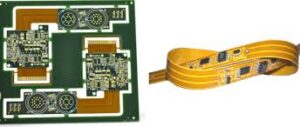
What is the influence of flex circuits on design costs?
Flex circuits are able to provide a high level of signal integrity, which is especially crucial for high-speed digital systems. This is due to the flex circuit’s ability to handle rapid rise times, which can be difficult for rigid PCBs to achieve. Moreover, a flex circuit has a larger surface area for heat dissipation than its rigid counterpart, making it the perfect choice for applications that need to perform under high stress and temperature conditions.
The cost of a flex circuit is determined by the number of layers and the type of material chosen for the flex layer. The thickness of the flex circuit is also a factor that can increase its cost. A flex circuit that is made from thicker copper and has more layers will be more expensive than one with thinner copper and less layers. It is a good idea to use a PCB manufacturer calculator to determine the overall cost of a flex circuit before it is designed.
Some factors that contribute to the price of a flex circuit include the aspect ratio of the plated through hole (PTH) holes and vias. A high ratio can make it more difficult to place components, resulting in higher rework costs. The size of the drilled hole can also impact cost. A smaller hole may require more time and effort to etch, while a larger hole will be more difficult to route through.
In addition to these considerations, it is a good idea to check the flex circuit manufacturer’s IPC-610 compliance rules and their guidelines for acceptable flex circuit designs. This will help you avoid common DFM mistakes that can significantly raise a flex circuit’s cost.