
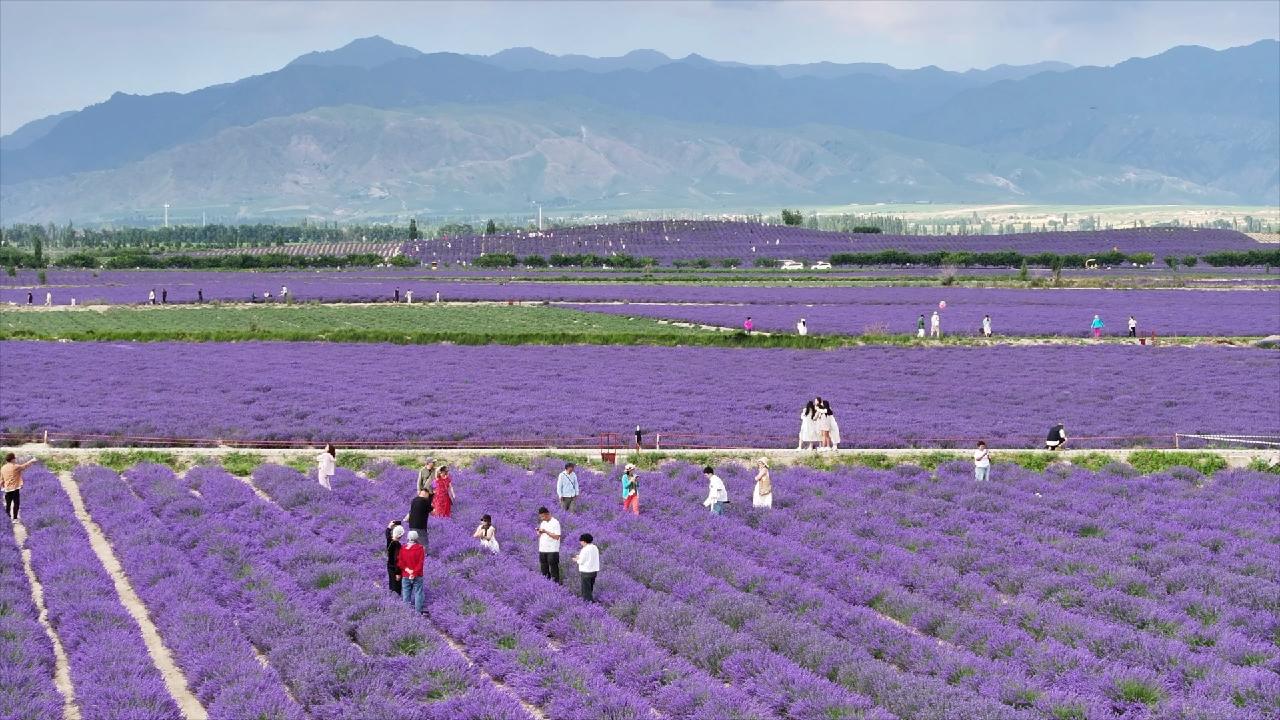
<img src='https://news.cgtn.com/news/2025-08-10/How-Xinjiang-village-transformed-from-dusty-fields-to-lavender-dreams-1FJ5XSgDBh6/img/7287e52a123b44118a9f5ba2d38dcaba/7287e52a123b44118a9f5ba2d38dcaba.jpeg' alt='Lavender fields in the village of Sigong.'
Tucked away in the Ili River Valley in northwest China’s Xinjiang Uygur Autonomous Region, the village of Sigong once struggled to survive. The soil here was thin, rocky and poor for farming. Yields were low, income was meager and the village streets were quiet except for the elderly and children. Most young people left to work in faraway cities.
<img src='https://news.cgtn.com/news/2025-08-10/How-Xinjiang-village-transformed-from-dusty-fields-to-lavender-dreams-1FJ5XSgDBh6/img/ad05496e3e6b4a288c00f9c3807b9984/ad05496e3e6b4a288c00f9c3807b9984.jpeg' alt='Lavender fields in Sigong. '
Everything began to change in 2009, when the village began planting lavender as an experiment. The purple blossoms didn’t just brighten the landscape, they brought a new future. Lavender earned far more than traditional crops, sparking enthusiasm to plant more.
By 2017, over 95 percent of the village’s farmland was covered with lavender.