
Transpose Guitar and Piano Transcriptions
Music written for the piano can be adapted to guitar, but it is usually much easier to transcribe pieces that have been specifically written for the instrument. The reason is that piano and guitar have very different characteristics. In particular, the sound of a piano can be very bright and resonant, while the guitar has a deeper bass. Piano pieces arranged for guitar are often made more comfortable for the guitarist by making adjustments to the fingerings and by transposing them an octave lower or higher to fit the guitar.
In some cases, it may be necessary to add instructions for the player on how to articulate the piece. These can be indicated by slurs or staccato dots, for example. A slur indicates that the musician should play the notes with a legato feel, while a staccato dot means to stop and start playing each note more quickly. It may also be useful to indicate whether a passage should be played with fingers open or closed. The numbering of the fingers on the fretboard is an easy way to do this. A ‘1’ indicates the player should use their index finger, a ‘2’ indicates the middle finger, and so on. It is also possible to include the names of each finger on the fretboard in a tab so that a player can check which finger to use for a given note.
It is also important to consider whether a particular part of the music should be played with a full chord or a simple one. In general, a guitarist will prefer to play with full chords where the chord has more stability and a strong rhythm. A simple one, however, can be a more comfortable option for beginners, as it is easier to make sure all the notes are played correctly and that they do not sound too thin.
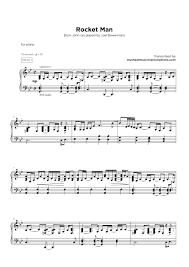
How to Transpose Guitar and Piano Transcriptions
If a song has chords that span several octaves, it is essential to transpose them for the guitar. Otherwise, the guitarist will not have any idea what octaves they are supposed to be playing in and will probably struggle to keep up. It is best to avoid transcribing music that requires jumping between octaves when possible, as this can be difficult for beginners to master.
Another thing to remember when trancribing is that the guitar has four strings, whereas the piano has many more. It is therefore easy to forget that it is not possible for a human hand to traverse the gap between two frets in a short amount of time, especially when complicated fingerings are involved.
Lastly, it is very helpful to have a good set of headphones to listen to the music being transcribed. The Audio-Technica M50 model is highly recommended for this purpose, as they have an excellent balance across the frequency spectrum and are able to reveal details of the music that can be easily missed with cheaper models. This makes them ideal for transcribing and listening to acoustic guitar music as well as classical and flamenco piano pieces.