
Used in Flex PCB Manufacturer Processes
The first step in a flex pcb manufacturer processes is applying a layer of solder paste to the conductive pads on the board. The solder paste is a mixture of tiny metal balls, or “solder,” suspended in a medium called flux. The flux helps clean the surface of the conductive pads and prevents them from oxidizing during the soldering process.
A squeegee is used to apply the solder paste to the pads on the PCB. The squeegee is guided by registration marks known as fiducial marks. Using fiducial marks to align the stencil and PCB is critical for accurate printing. The thickness of the stencil is another important factor in determining the quality of the printed solder. It is recommended that the stencil be up to 3mm thick to ensure the correct volume of solder paste is deposited in each aperture. A thinner stencil may not have enough material to fill the apertures and can result in high edges around the deposited solder, which are known as dog ears.
Once the solder paste is applied to the pads, SMT (Surface Mount Technology) components are placed on top of it. SMT components include resistors, capacitors and other electronic elements. They are also known as “through-hole” components, because they have leads that extend through the holes on the board. The resulting surface is then covered with another layer of solder paste. The components and paste are then heated in a reflow oven. The heat melts the solder and adheres it to the conductive pads.
After the reflow process, the flex circuit is optically inspected and electrically tested. Once all of the tests are complete, the flex circuit is punched out of its panel and sent to final quality check (FQC). During the FQC process, the flex circuit is verified that it is free from defects and ready for shipping.
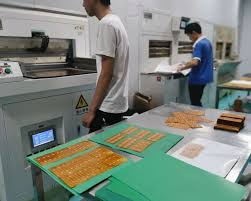
How is Solder Paste Used in Flex PCB Manufacturer Processes?
The unique structure of flex circuits presents some challenges when it comes to assembly and soldering. For example, flex PCBs can bend and warp during the reflow process if they are not properly fixed to a rigid carrier. This problem can be prevented by carefully handling, transporting and storing the flex circuits and by using specialized soldering techniques.
Solder paste plays a crucial role in the manufacturing processes of flexible printed circuit boards (PCBs), especially in the realm of surface mount technology (SMT). Flex PCBs, known for their versatility and adaptability to various applications, require precise soldering techniques to ensure reliable connections in their flexible substrates.
The application of solder paste begins with the printing process. Using a stencil, solder paste is accurately deposited onto designated areas of the flexible substrate, typically made of polyimide. This step requires precision to ensure that the solder paste is applied only to the intended locations where electronic components will be mounted.
Once the solder paste is applied, electronic components such as resistors, capacitors, and integrated circuits are carefully placed onto the flex PCB. The solder paste serves as a temporary adhesive, holding the components in place during the subsequent reflow soldering process.
During reflow soldering, the flex PCB assembly is subjected to controlled heating, causing the solder paste to melt and form a metallurgical bond between the component leads and the copper traces on the flexible substrate. This process requires precise temperature control to prevent damage to the delicate flex materials while ensuring complete solder reflow and proper wetting of the solder joints.