
flex circuit support
As the technology behind 5g network infrastructure continues to evolve, many industries will have to consider implementing this new network in order to keep up with the competition. However, there are a few considerations that will need to be made before doing so. One of the most important concerns is ensuring that the circuits that will carry the data will be capable of handling the high-speed signals required. The good news is that flex PCBs are able to support the new technology, thanks to their high-frequency performance and flexible design.
The high-frequency performance of flex circuit is what makes them a perfect choice for supporting the new 5g technology. The fact that these PCBs can handle higher frequencies than previous generations means that they will be able to transmit more data at a lower cost, while still providing the same level of reliability. They also offer enhanced flexibility, which will allow them to fit into more compact spaces than traditional rigid boards, and can be customized to the shape of the product they are going to be installed in.
This flexibility will also help save money, as fewer wires are needed to connect the different components of a device. This will reduce assembly costs, while lowering the risk of error and improving the durability of the finished product. The customization of the routing paths in a flex circuit will also improve overall quality, and eliminate the need for rework and retesting after the product has been assembled.
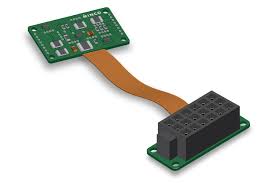
How does flex circuit support 5g technology?
A flex circuit is a type of printed circuit board that uses conductive copper foil as the basis for its construction. The flexible circuit is then backed with an adhesive material such as polyimide or a thin layer of glass that helps to ensure the electrical insulation of the circuit. In some cases, the flex circuit may also be coated with tin or gold to enhance its appearance and protection.
In order to make a flex circuit, engineers must first identify all of the specific mechanical and electrical requirements of the project. This includes the currents and voltages, capacitance and impedance, wiring, types of components, signal types, and other factors that will influence the final design. Once this information has been established, the flex circuit can be designed using simulation software or through physical prototyping. The resulting Gerber files will be sent to the manufacturer, and the flex circuit can then be fabricated and tested to ensure that it meets all of the project specifications.
There are two fundamental varieties of flex circuits based on the number of conductor layers. A double-sided flex circuit has two conductor layers that can be accessed from both sides, and a single-sided flex circuit has one conductor layer that can be accessed on one side.
Another variation is the rigid-flex circuit, which combines the features of both rigid and flex circuits into a single structure. This allows the flex circuit to be used in a wide variety of applications, including industrial, consumer, and medical devices. The flex circuit is also an ideal choice for the Internet of Things (IoT), as it can accommodate a wider range of connections and allow for more accurate measurements.